I led the experience strategy for moving a theme-park ticketing service away from vulnerable static tickets—without making digital confidence a condition of entry.
Evidence statusReported pilot signal: zero fraud incidents. The source does not include the pilot size, dates, baseline volume or independent validation, so this is not presented as a verified performance metric.
Multi-channel entry designed around identity, assistance and operational reality.
RoleDigital Experience Manager
ScopeUX strategy · research · journeys · prototyping · handoff
A security problem was also an inclusion and service-design problem.
Static multi-day tickets could be misused. The answer could not be a single digital gate: tickets originated through B2C and B2B web purchases, call centres, walk-in counters and partner distribution. Large tour groups could receive tickets only moments before arrival.
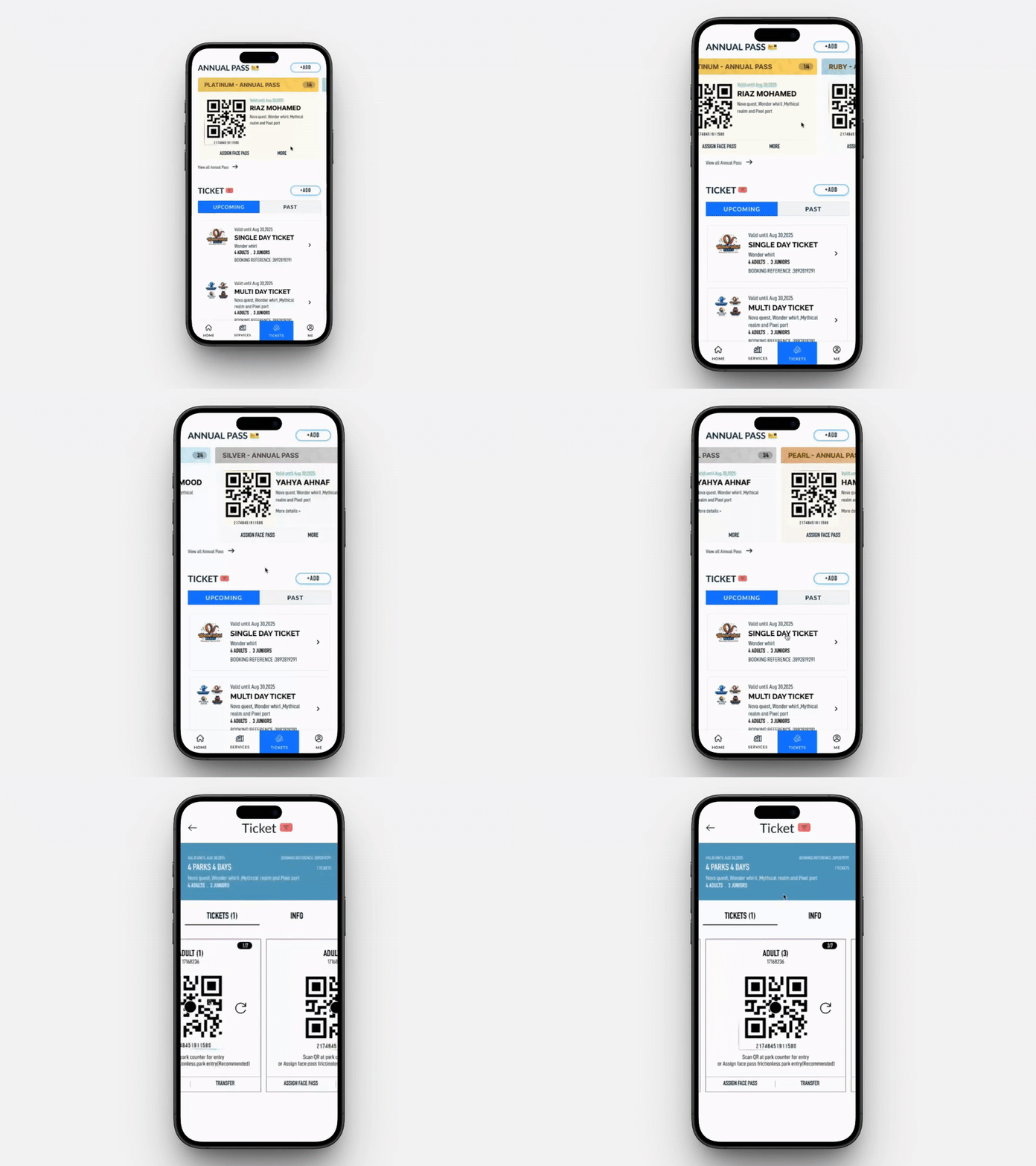
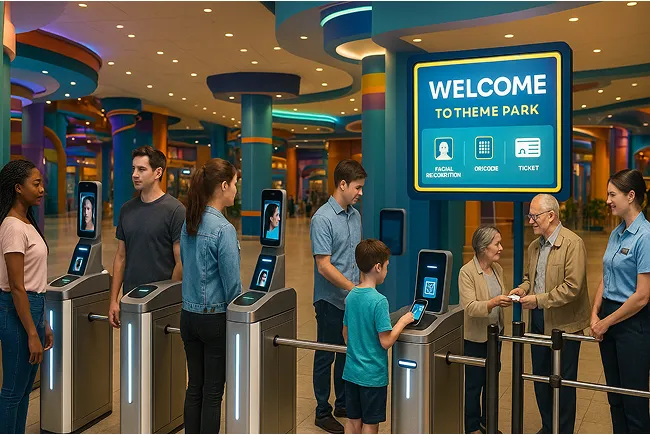
The strategy introduced three prioritised redemption routes—dynamic QR, Face ID and assisted physical tickets linked to identity—supported by education across the full journey. The intent was one secure system with different paths into it.
The transformation
Before
Static tickets
Easy to distribute, difficult to personalise or trace, and vulnerable to misuse.
→System
Layered identity
Dynamic QR + Face ID + assisted, ID-linked paper tickets, connected across every entry channel.
→Result
Secure choice
A reported fraud-free pilot signal while retaining a route for less-digital visitors.
Validation pending
01 · Frame the real problem
Four tensions shaped the brief.
The business needed to eliminate static-ticket misuse, scale securely and meet UAE identity-verification requirements. Guests needed fast entry, clear redemption instructions, confidence that a valid ticket would work, and a non-digital route when required.
Security ↔ ease
Add identity without creating queues, confusion or denial anxiety.
Many sellers ↔ one entry
Unify website, call-centre, counter and partner-originated tickets.
Personalisation ↔ late handover
Support B2B groups of roughly 50–70 people whose tickets may arrive at entry.
Digital scale ↔ equitable access
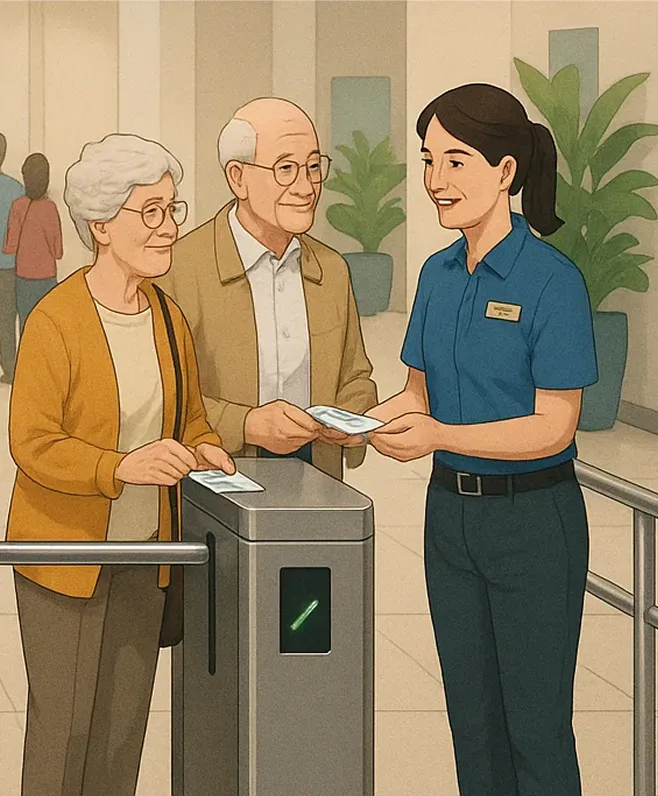
Keep seniors, tour groups and less-digital guests inside the service.
02 · Research the service
Observe the journey, not just the interface.
I mapped the existing purchase-to-entry-and-exit journey and passively observed how guests moved through it. An ethnographic lens surfaced operational friction that screens alone could not show.
A customer journey map connected interactions across park touchpoints. Direct benchmarking covered Disney, Universal Studios and “Trope” as named in the source, focused on multi-day and multi-park systems. Parallel-industry analysis looked for adaptable security and usability patterns.
Internal data indicated that B2B generated most ticket sales and showed a higher fraud rate than B2C. Exact volumes and rates are not supplied, so the finding is retained as a directional input—not a quantified result. It shifted attention toward tour-operator onboarding and education.
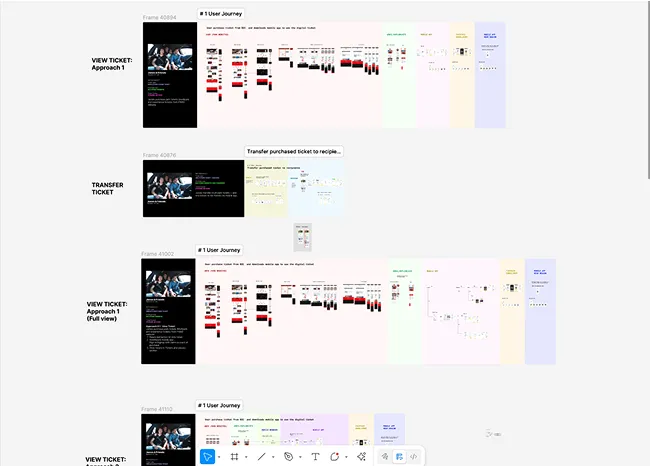
AS-IS analysis used to expose handoffs, friction and opportunities.
03 · Make the decisions
One system. Three prioritised ways through.
Options were assessed where technical feasibility, business viability and user usability overlapped. The source states that the first three routes were prioritised for UAE legal compliance; formal legal approval evidence is not included.
01
Dynamic QR
A unique, app-activated code adds traceability for digitally confident guests.
Prioritised02
Face ID
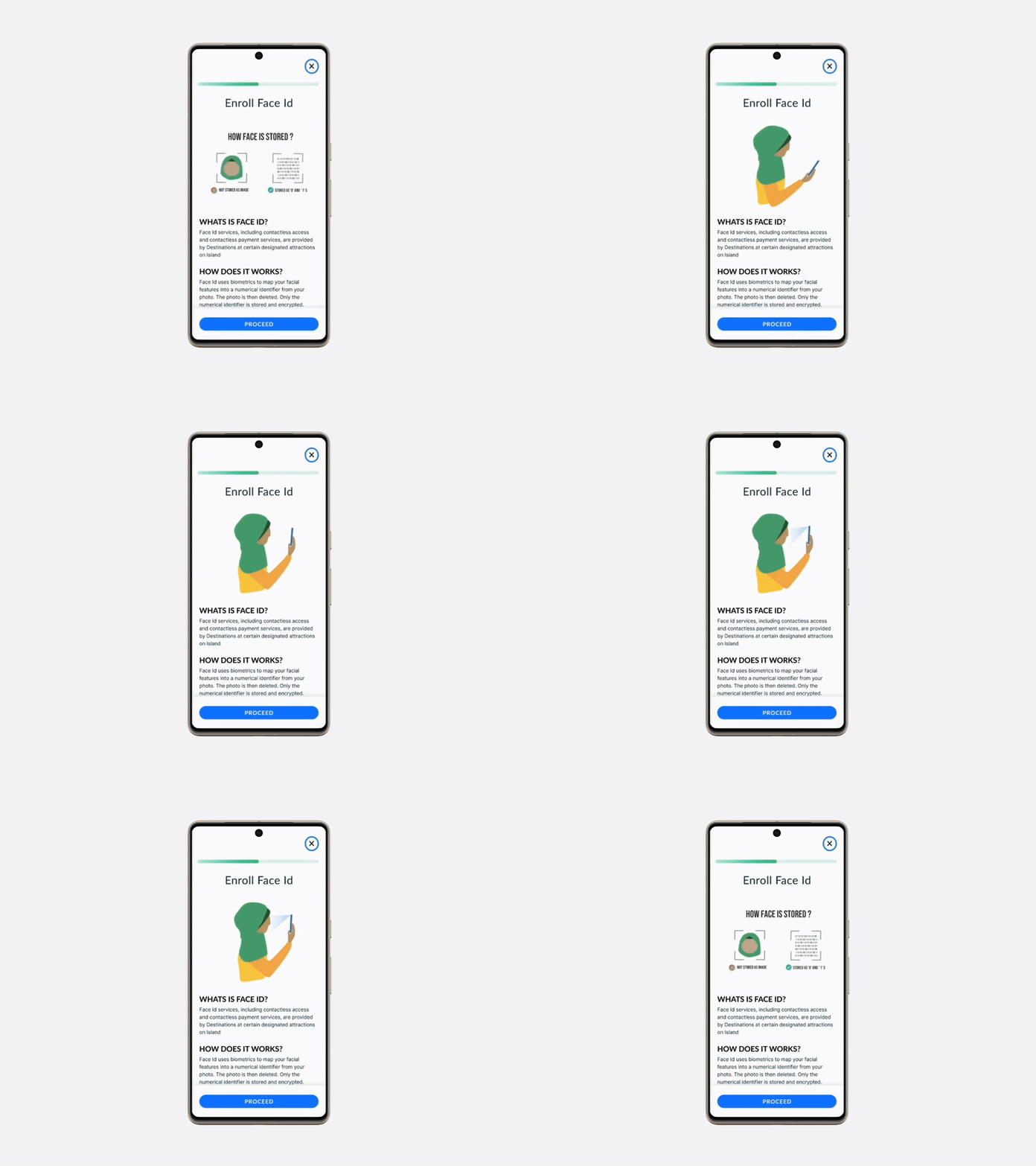
A ticket can be linked to facial verification for secure, contactless entry.
Prioritised03
Assisted paper
A counter-issued ticket linked to government ID preserves access for less-digital guests.
Prioritised04
Biometrics
Fingerprint or iris verification was considered as an advanced option.
Explored05
Entry photo
Time-stamped photography was considered for multi-day verification.
Explored
Feasible
Work with the park’s existing technology and infrastructure.
Viable
Keep the service sustainable within operational and budget constraints.
Usable
Make secure entry understandable for guests with different levels of digital confidence.
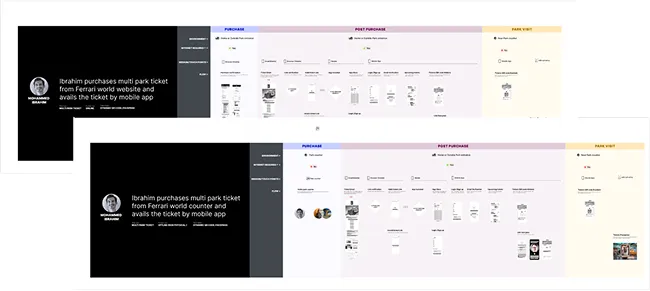
B2C and B2B online purchase, call-centre booking and walk-in counter transactions were mapped in multiple permutations.
Education
Digital and physical redemption guides, in-app guidance, and banners on high-traffic pages were designed to prepare guests before entry.
Incentive
Mobile registration was paired with a food-purchase discount at entry, supporting adoption and future analytics and marketing use.
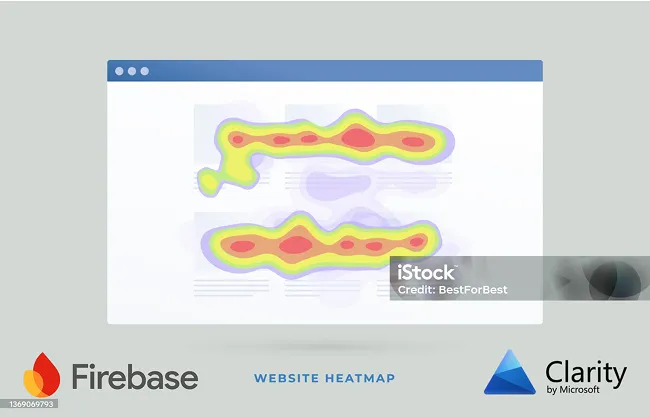
Scenario-based journeys across purchase and redemption.Education placed where analytics suggested it would be seen.
05 · Prototype, test, refine
Move from hypothesis to build-ready behaviour.
Multiple directions progressed from low- to high-fidelity prototypes. Hypotheses guided decisions, while cross-functional teams, operational leaders and business stakeholders—including ChatGPT-assisted inputs—supported rapid feedback and iteration.
Figma was the primary tool for wireframes, high-fidelity design and prototypes, supported by Adobe Suite. As design-system custodian, I maintained reusable components, styles and brand consistency across clients.
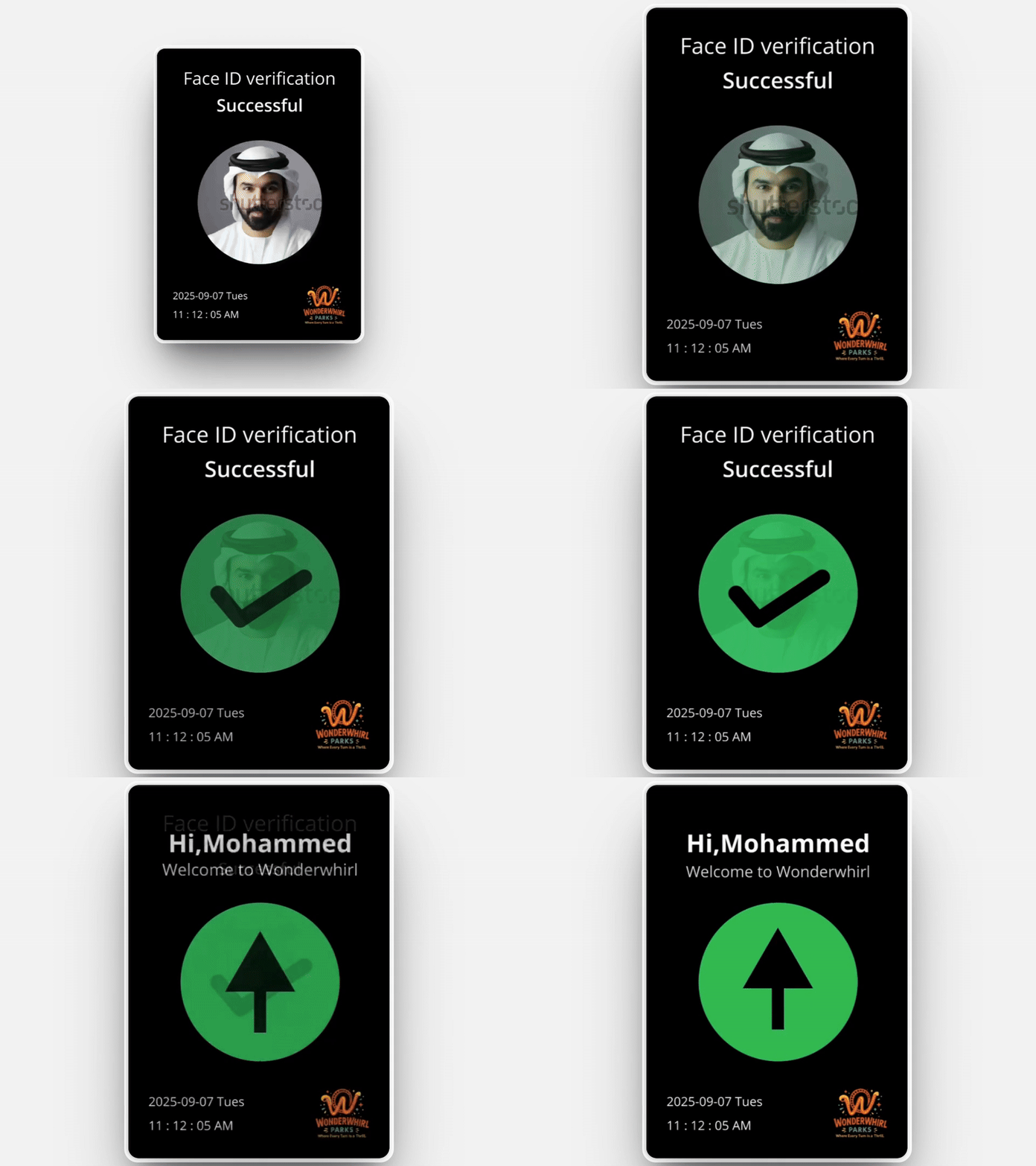
Interaction prototype: secure redemption flow.Reusable behaviour and interface states across the service.
06 · Delivery & impact
What changed—and what can be claimed.
The service moved from one vulnerable static model to three security paths across website, mobile app and kiosks. Guidance and campaigns were used to reduce the added effort of registration and identity linking.
Implemented · source-reported
Three redemption methods
Dynamic QR, Face ID linking and counter-issued physical tickets.
Pilot claim · validation pending
Zero incidents reported
The original case also calls this “100% fraud reduction.” Without baseline and sample data, both statements are treated as the same unverified pilot claim.
Capability created · not outcome-quantified
Registered guest data
Mobile sign-up enabled future data-science and targeted-marketing activity; no consent, adoption or campaign-result figures are supplied.
Qualitative claim · not measured
Usability maintained
The source reports a seamless flow and improved engagement, but provides no usability score, time-on-task or conversion evidence.
Delivered multi-platform experience.Guest-facing guidance and redemption interaction.
07 · Reflection
Security adoption is a communication problem too.
Reflection captured after delivery.
Balance security with usability
Extra verification can work when the benefit is transparent and assisted alternatives remain available.
Educate early
In-app guidance and marketing materials should prepare guests before the new behaviour is required.
Design for different confidence levels
Digital-first must not become digital-only; the operational path is part of the experience.
Iterate with the whole system
Fast feedback from development, testing, operations and business enabled adjustment, but multiple sign-offs added complexity.
Respect the constraints
Technology limitations and differing web, mobile and kiosk requirements shaped both the design and the flow.
Improve measurement next time
Cross-platform pilot tracking was limited. A future rollout should define the baseline, exposure, fraud taxonomy, usability guardrails and reporting owner before launch.